
First station to operate divided area
DEVONAIR, the 26th ILR station and the seventh of the nine “new” stations authorised in October 1978 by the Home Office, came on the air last Friday, November 7.
It is the first of the ILR stations to operate a divided area. Its main studio complex is in Exeter and for the first few weeks of its life it will be transmitting only from there to the 240,000 people who live in the area embracing Crediton, Sidmouth, Budleigh Salterton, Dawlish, Teignmouth and Newton Abbot and, of course, Exeter and Exmouth.
The station will operate on 450m medium wave and on 95.8MHz VHF in stereo.
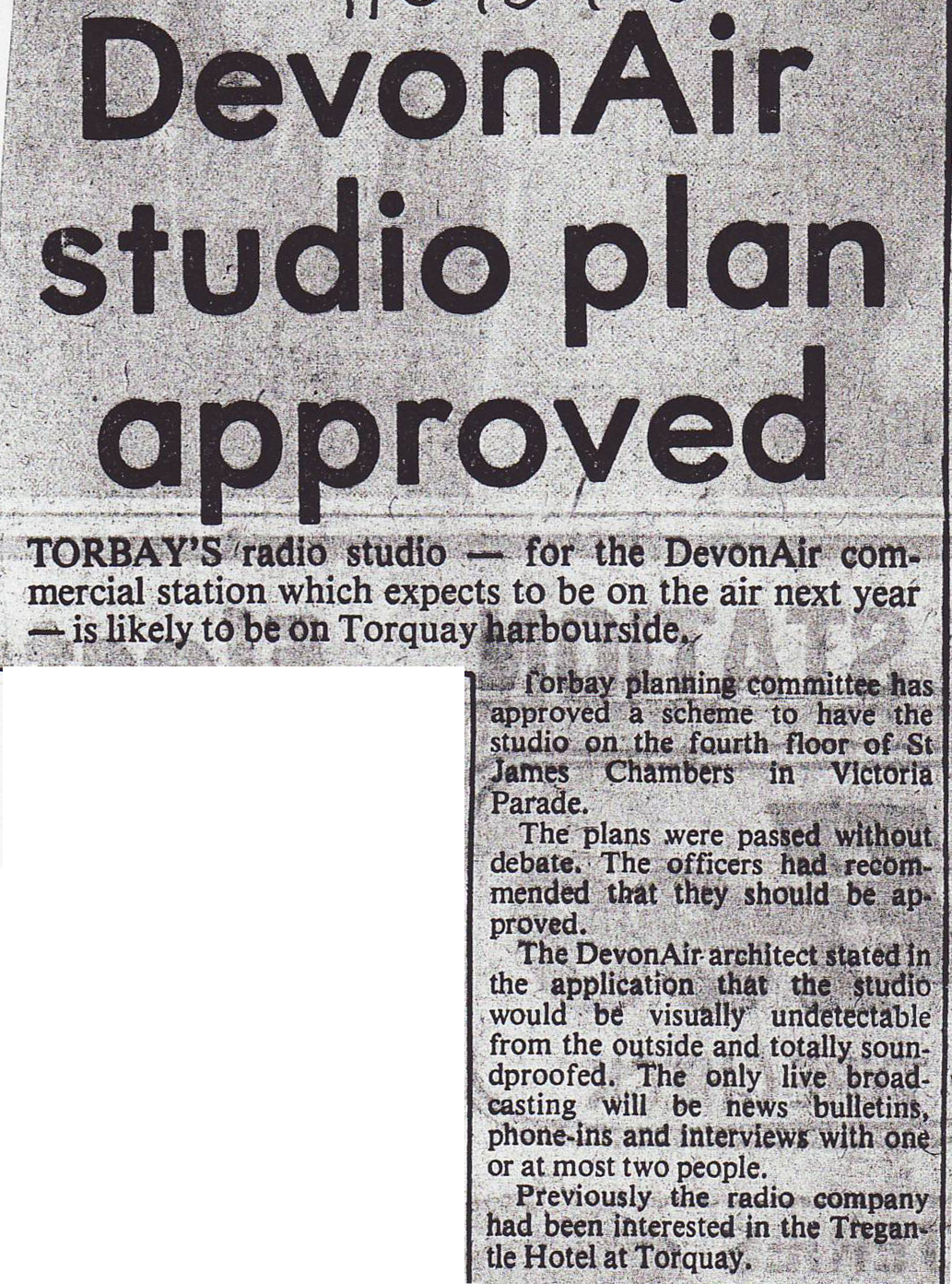
Early next month the IBA will bring two further transmitters into operation covering the Torbay area and adding about 190,000 listeners to the potential audience. Then, three or four months later, a Torbay studio will come into operation and each sub-area will be able to have its own exclusive programmes for parts of the day.
Before that happens it will be possible for Devonair to separate its commercial operations, linking them as necessary or one pair of transmitters or the other. This, of course, will be of special interest to local advertisers whom the station aims to encourage.
Policy
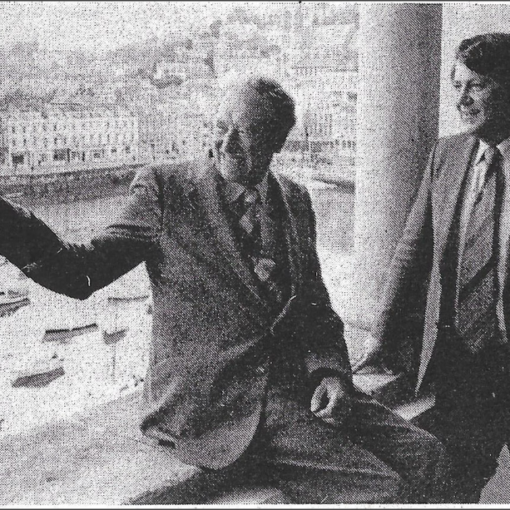
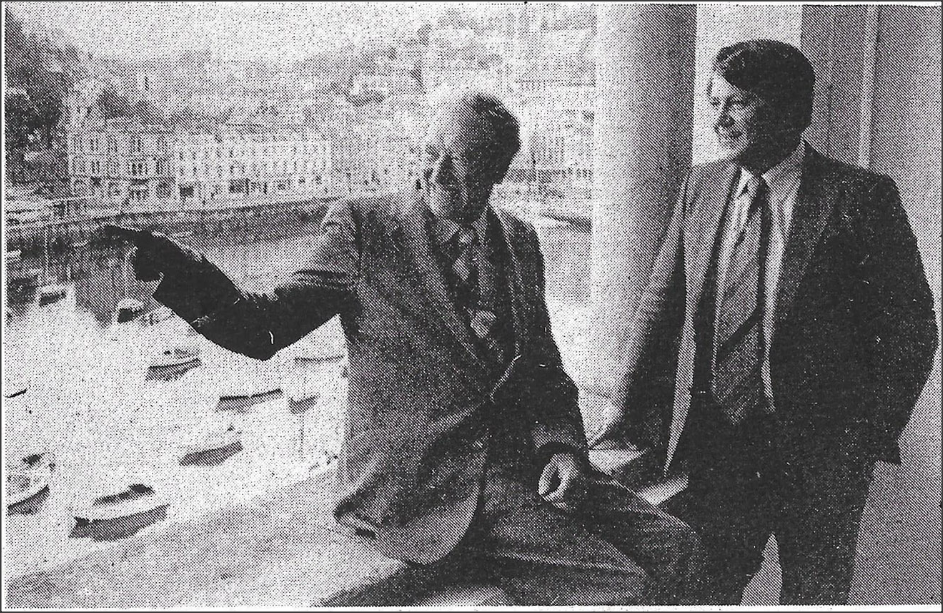
“On the other hand,” says Maurice Vass, Devonair’s managing director, “we have set up the station with broadcasting rather than marketing in the forefront of our minds. What is more, the policy behind the first twin ILR station has attracted a number of first-rate people to our staff and we have been able to build a team around them. Certainly we haven’t just drifted together.”
Maurice Vass has a background primarily in television. He joined Tyne Tees in the sixties as a management trainee and finished up there as general manager. He was also with Yorkshire for a time.
His programme controller is Jeff Winston, a broadcaster with wide radio experience who previously held the same post with Pennine Radio in Bradford.
The station, with a permanent staff of 30 and a handful of freelance presenters, has taken to the air in an atmosphere of confidence, fortified by the fact that its studios passed the strict IBA technical and acoustic tests at the first go. “They told us it was the first time it had happened,” says Maurice Vass.
Hours
Devonair is broadcasting from six in the morning until nine at night, following the IBA’s wish that new local stations should not begin on their first day with a full schedule. As soon as the Torbay transmitters have come on the air next month there will be an extension until midnight.
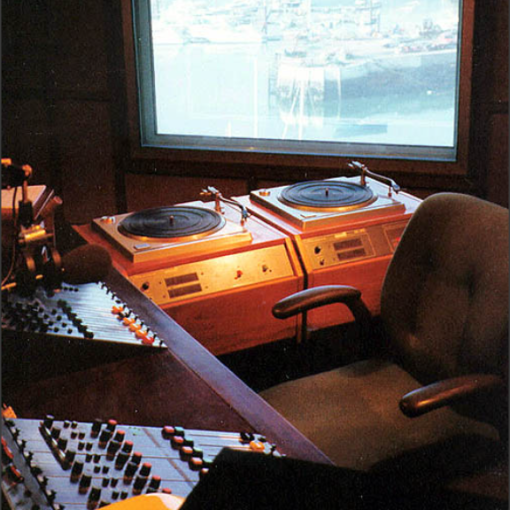
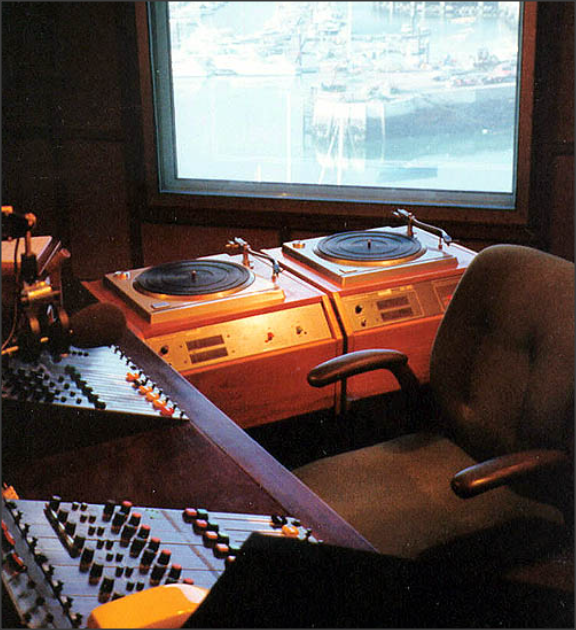
When the Torbay studio begins operating in March or April next year — “there can’t be another studio like it in the country,” Vass maintains, “almost at the water’s edge with its large plateglass picture window overlooking the yacht harbour and the open sea beyond” — the hours will be reconsidered in the light of the dual programme responsibilities.
Two other ILR stations, one already on the air and the other still in embryo, have reported this week on their activities.
Hereward, in Peterborough, has carried out its first piece of “dipstick” research through RSGB. Two months after it went on the air, it shows that 53 per cent of the population in its area listen to Hereward regularly each week. BBC Radio 2 with 45 per cent came second with Radio 1 ten points behind with 35 per cent.
“To have achieved such an audience after only two months of broadcasting,” says Cecilia Garnett, the company’s managing director, “gives the programme staff an excellent basis on which to build a better and better service for listeners and advertisers alike.”
Hereward has also appointed Dougie King, one of its presenters, to be music organiser, working to Stewart Francis, head of music and entertainment.
Aberdeen’s ILR station, for which a name has still to be found, is due to go on the air next summer. Bill Atkenhead, who has worked with BBC radio and television, with ITV and with commercial radio in Canada and who then became general manager of Aberdeen airport, has returned to broadcasting to become managing director of North of Scotland Radio, the company which will operate the franchise.
June Imray is the station’s controller designate, but in the meantime she has been helping with the building of the new studios in Aberdeen which will be close to Grampian and the BBC.